

July 2026
Summer flowers, a new form of weaving pattern, and basketry in Spain

In this newsletter you’ll find:
Studio Views
ITERATIONS 001 — a new form of weaving pattern
Baskets in Spain, Part One
Studio Views
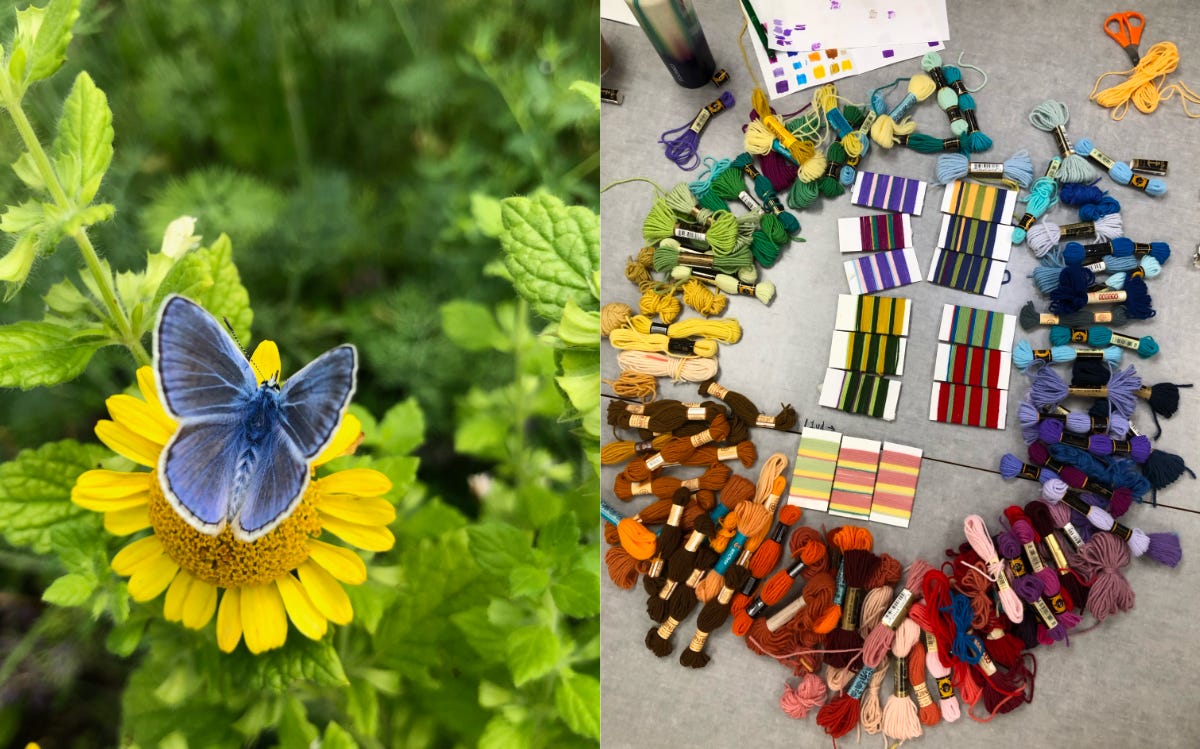
Here we are, mid July, and everything is full of colour, from the garden to the very fun Colour for Textiles class I taught at the Art Gallery of Burlington. If you were interested and my very last minute mention last month did not work with your schedule, I’ll be teaching it again this fall — we’re just confirming dates now.
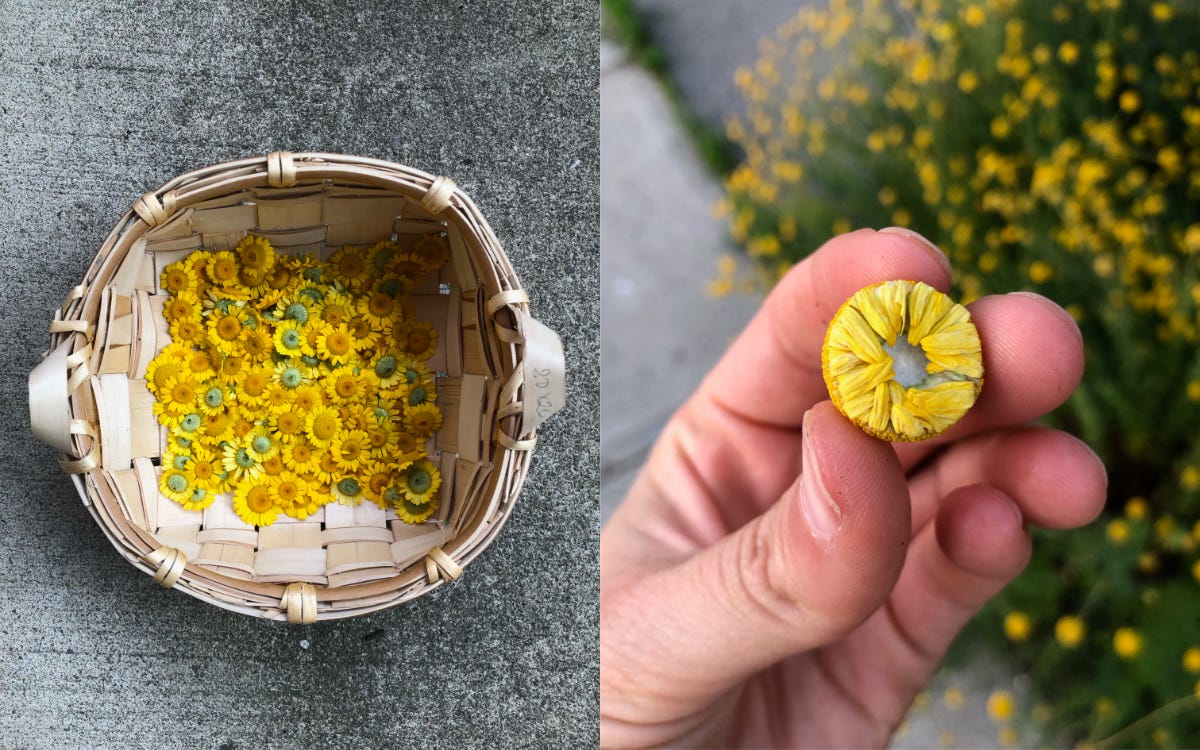
I’ve been busy harvesting dyer’s chamomile. Did you know if you let the flowers expire on the plant, the petals fold themselves underneath? It’s very beautiful.
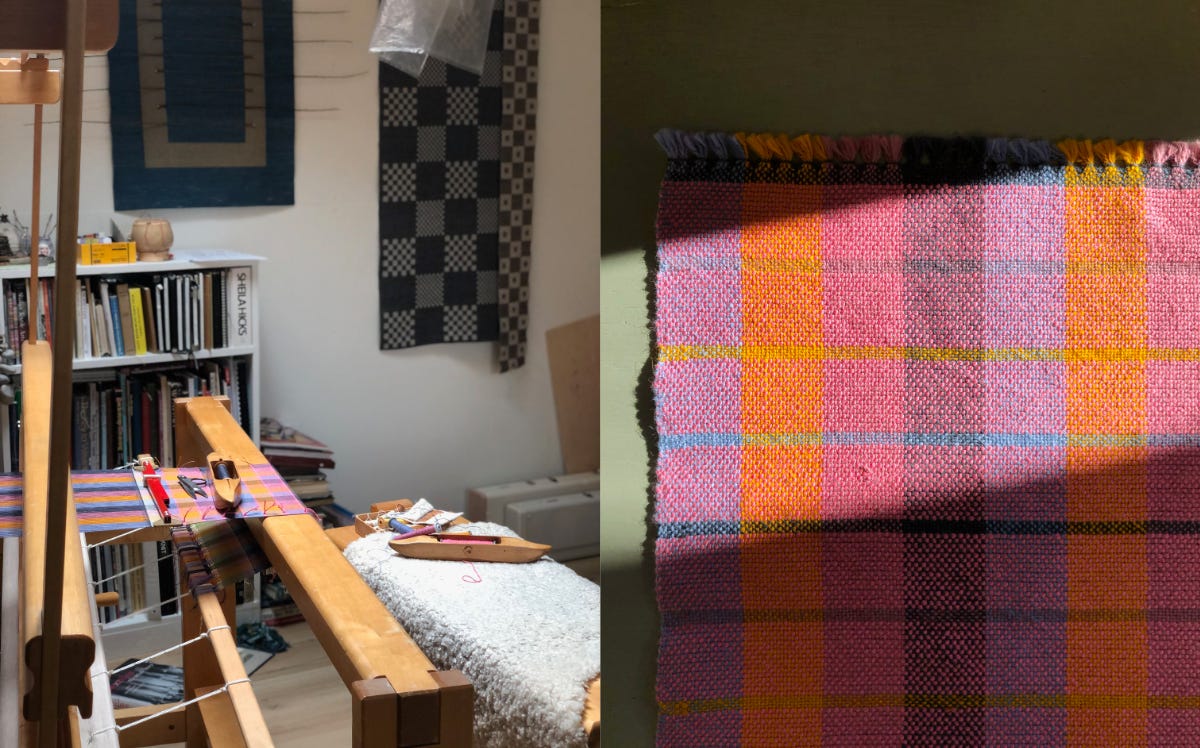
I’ve been weaving away on a few small things, of which this one is ready to share!
ITERATIONS 001
If you make something, there’s usually a part of the process that you might not like as much as another. My least favourite part of writing weaving patterns is coming up with the project: how many towels do people really want to weave? We all make for different reasons, and sometimes it ends up that the ideas I think are cool (for example, mittens) end up as my least popular pattern.
On the other hand, my favourite part of pattern design is the process of iteration: sampling and testing materials, colours, and sett to see what happens if I do X, Y, or Z. I have said before that if I would be very happy if I could sample forever — no need to make finished things! Just let me test yarn and material and structure all day, no problem! I am not a thrill seeker, but I imagine this to be the weaving equivalent: the moment of creative potential stretched out into infinity.
Based on the photographs people have shared of my patterns on their looms, I’ve surmised that many weavers have the confidence to adjust patterns to fit their needs, and it’s left me wondering if perhaps the project part is not as critical as I have assumed. Maybe the time consuming work of testing material, colour, and structure (the part I love the most) is where the true value of a weaving pattern lies?
Like many weavers, I’ve got an (overflowing) library of weaving books full of drafts. These books are frequently just the bare bones of pattern information (threading, tie-up, and treadling) and leave the creative and material choices up to you, the reader-weaver, to figure out.
So in the spirit of bringing these ideas together, I’ve created ITERATIONS 001, a new type of weaving pattern that I hope can bridge this gap between information and creation. It provides detailed pattern, making, and material information without project-specific instruction.
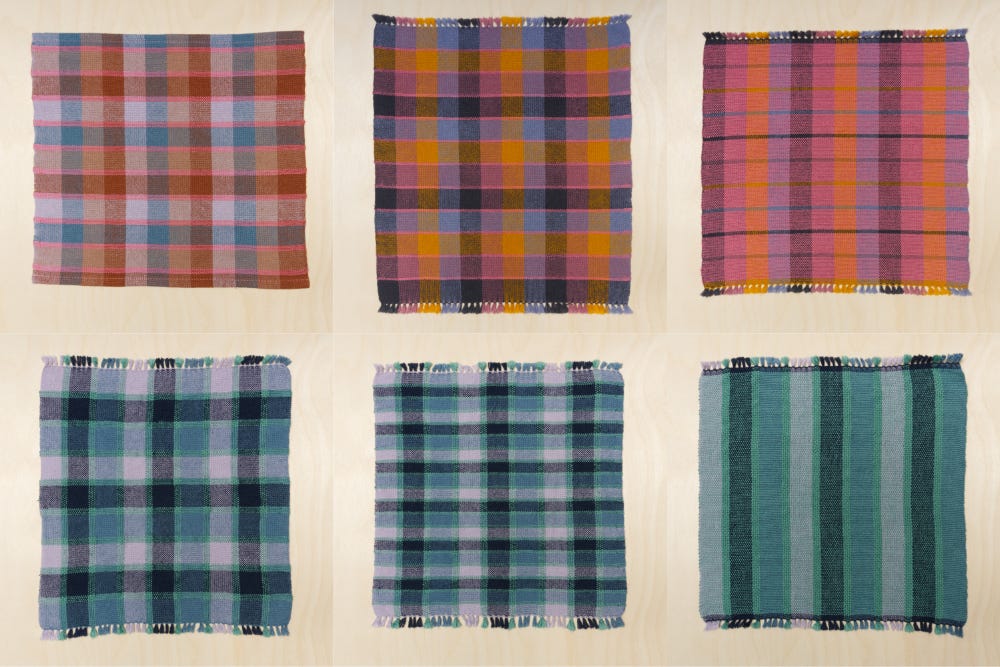
In this PDF, you’ll find six unique patterns that explore a similar idea and process. Each sample has its own page that includes the standard threading, tie-up, and treadling information, but also provides detailed information on warp and weft materials and colours, shrinkage, sett and beat, as well as warping and weaving tips and notes. All of the information you need to adapt and expand the samples into a project of your own is provided, including my thoughts on the hand (how the cloth feels) and what sorts of projects I might use it for.
My idea for Iterations is that it’s halfway between an old weaving draft and a modern weaving project; more information than a book, but with lots of room to flex your creative muscles. By omitting the project part, my hope is that this sort of pattern does the heavy lifting to get you onto the loom so you can get to the fun experimenting-and-creating part without wondering where to start.
For newer weavers who don’t have experience or confidence expanding this information into a project, the last two pages of the PDF explain the basic calculations and steps you’ll need to expand these patterns into the project of your dreams. It’s not hard!
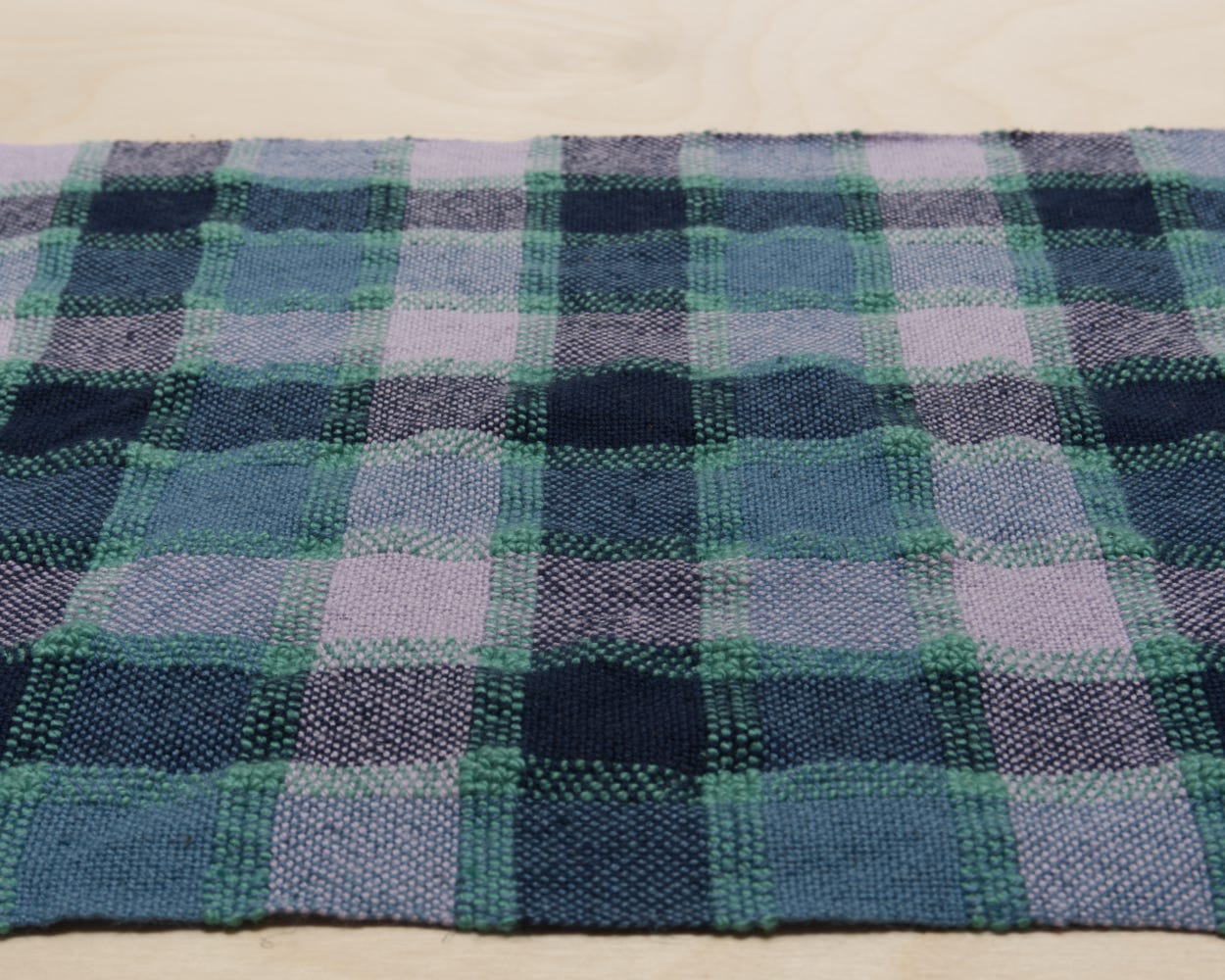
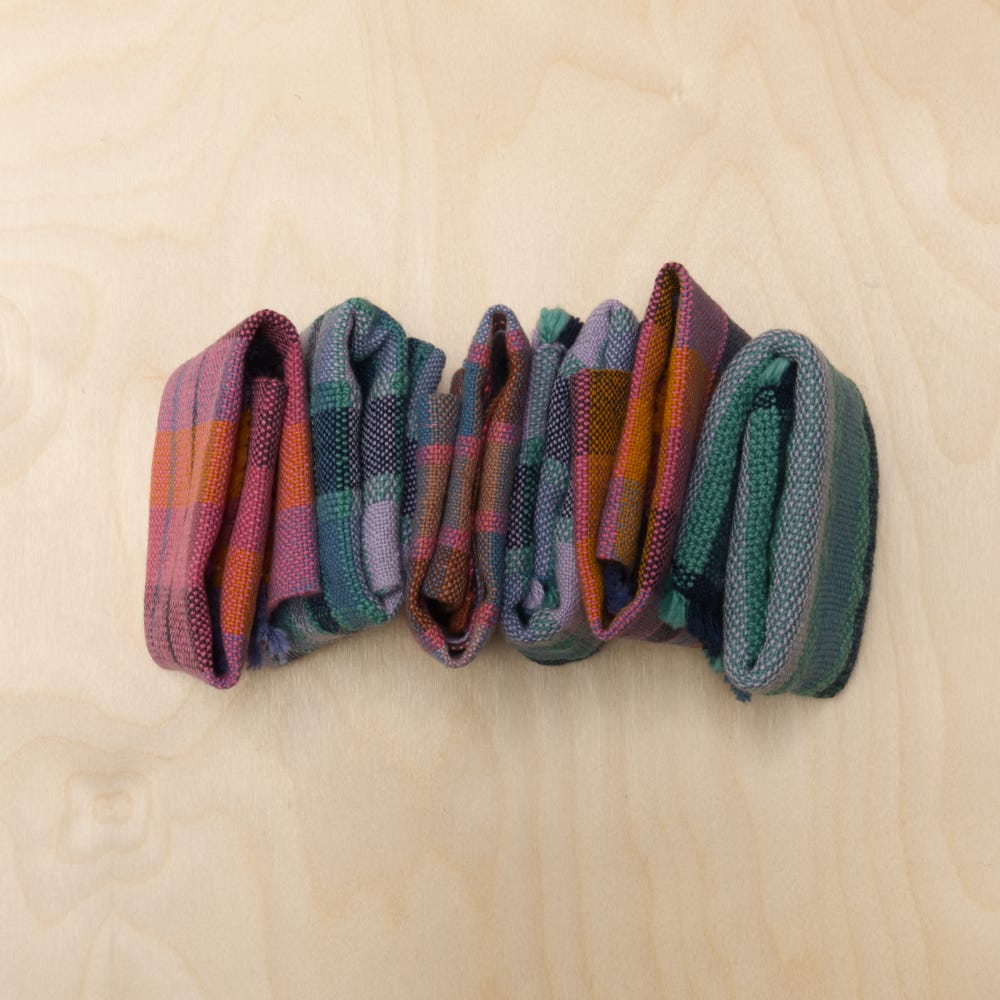
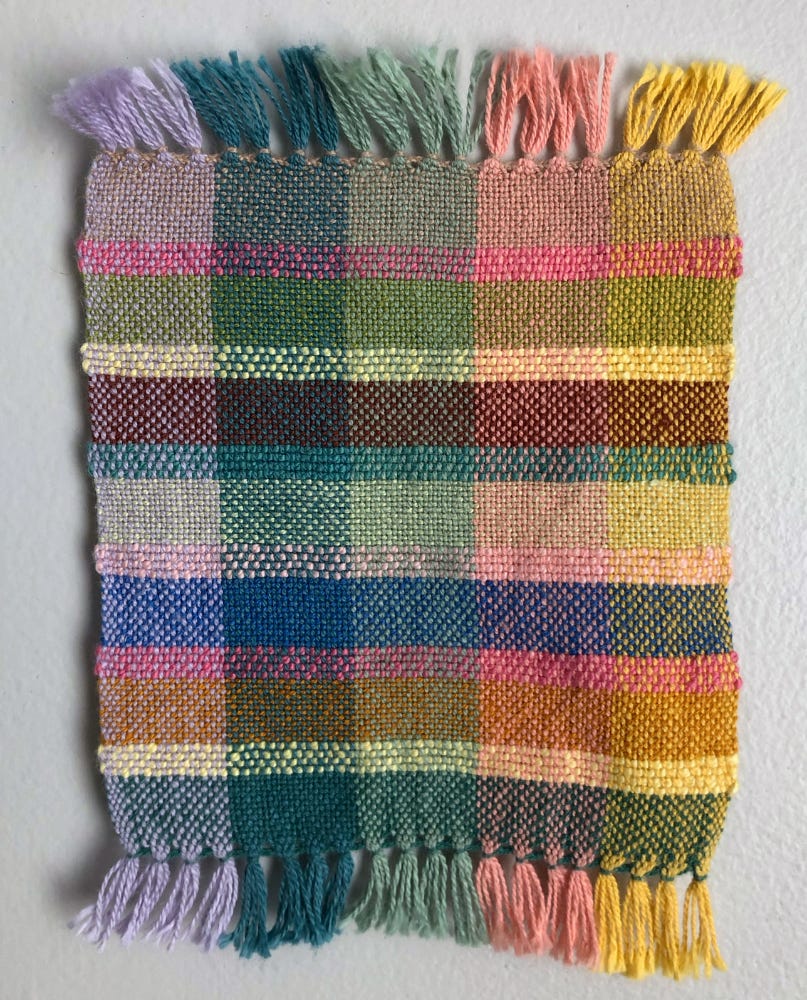
I hope this new type of pattern appeals to you as much as it was fun for me to work on. I often think being creative comes down to the improv technique of responding “yes, and?” to a question or statement. This first iteration began for me when I finished off a small sample warp using bits and pieces of yarn from prior projects. I always feel like these leftovers are the most delicious things I make, perhaps because I’m working more intuitively and open to accidental meetings of colour and material. When I pulled this off and washed it, I was reminded of “Yes, and?” and had to follow the thought to see where it lead me.
ITERATIONS 001 is now for sale in my online shop. I’ve priced it a tiny bit higher than my project-based PDFs, in a nod to the work and amount of information in the pattern (16 pages of photography and text), and number of patterns that you receive. Since feedback is always very valuable to me, please reach out with any thoughts about this new format, the project itself, or what you’d like to see going forward. Happy weaving!
Baskets in Spain, Part One
I was very fortune when I went to Spain earlier this year to have family and friends indulge my obscure side quests; namely, baskets!
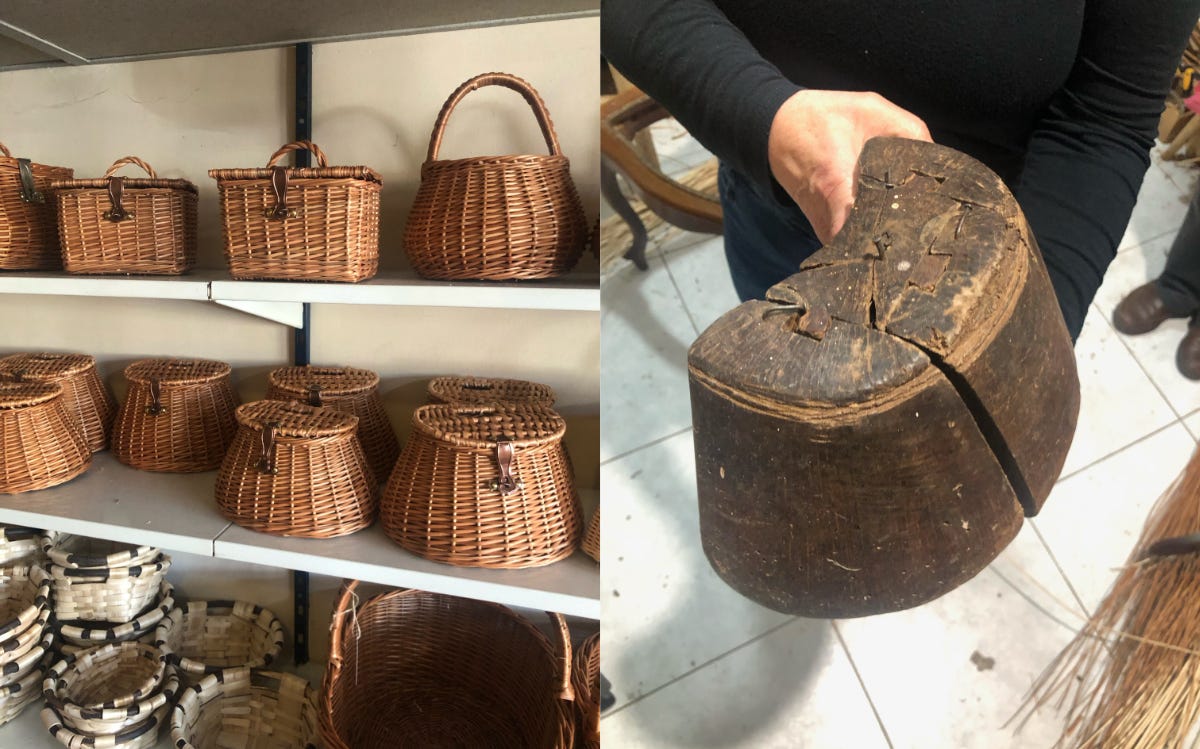
The first basket weavers we visited were Cestería Grao in town of Grado (or Grao in the Asturianu language). This shop is owned by brother and sister José Angel and María González, who inherited it, and their skills, from their father and grandfather1. They make and repair baskets, rush, and cane objects in traditional and contemporary shapes and forms. Beyond willow, they carry baskets made from chestnut, reed, and grass, and sell other craft items, too, like traditional Asturian clogs.
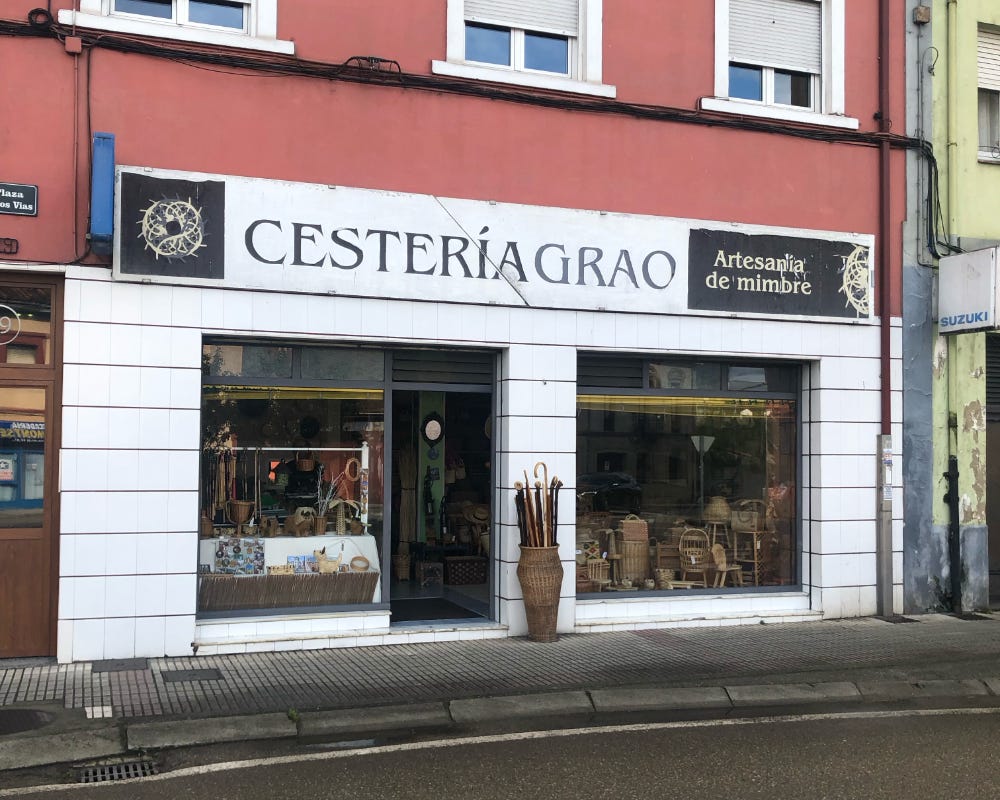
The shop was full of finished baskets and work in progress. A tiny back room functions as both willow storage and a well-used workshop: bundles of willow ready for soaking and weaving, pieces of equipment for stripping and cutting and shaping willow, and, naturally, many, many, MANY tiny sticks all over the ground (you only need to basket weave once to know this is a common side effect!).
Our family was very generous translators as the owners showed us tools and equipment, like this wooden mould used to weave a fishing creel. The basket is woven over and around this form, which is linked together with careful interior joints like puzzle pieces. After you’re finished weaving, you remove the pieces one by one and reuse it, creating endless perfectly shaped and sized baskets.
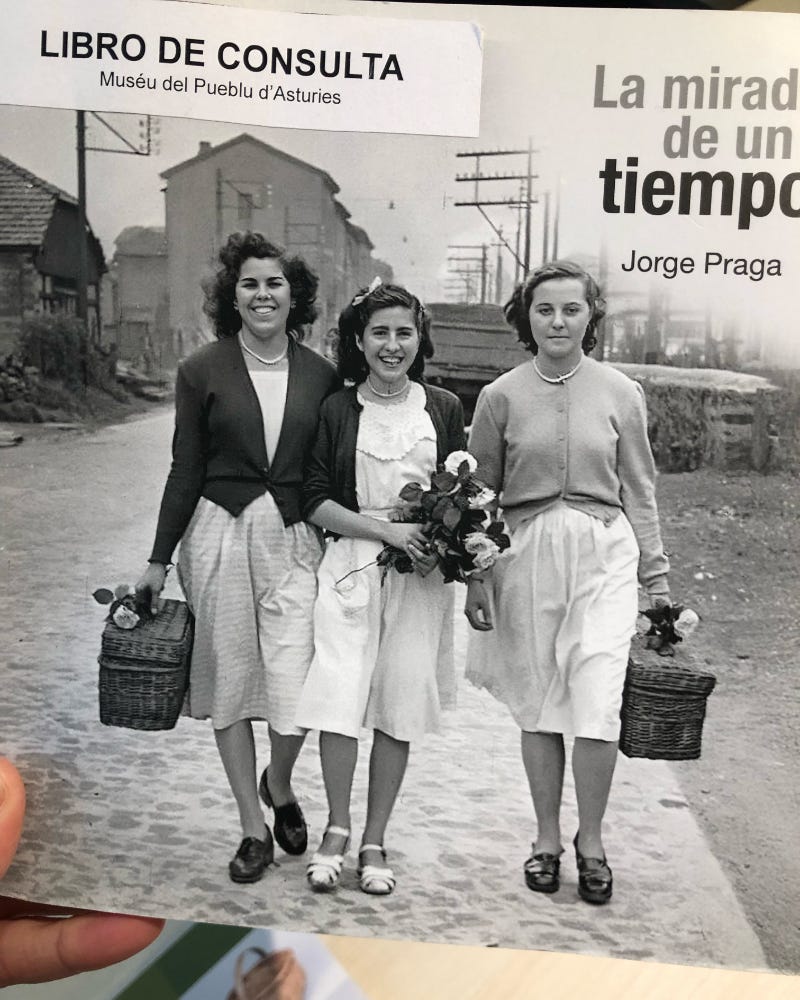
My favourite piece was the Asturian lunch basket. Mining was once a major industry in this region and hungry workers would pack these rectangular baskets with their day’s food. It was a fascinating basket that spoke to a culturally specific element of the way of life in this region of Spain. The longer I think about this basket, the greater my regrets that I did not bring it home.
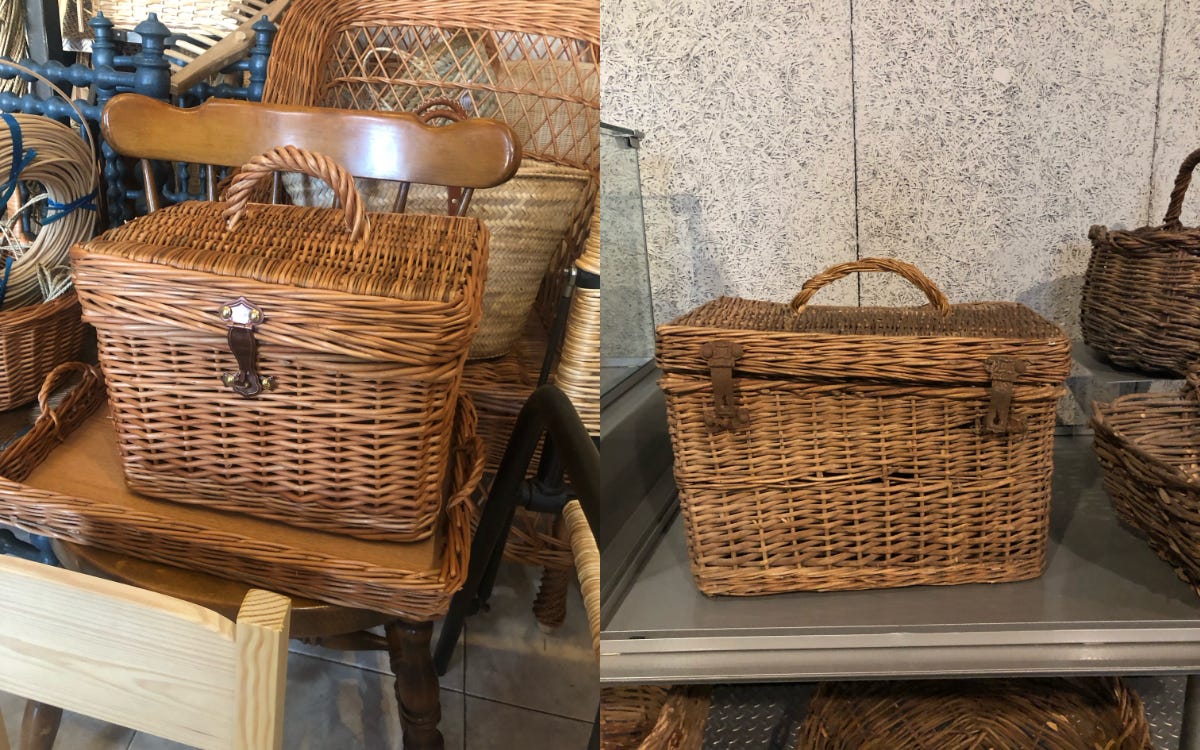
One of their Instagram posts refers to “maleta de ferroviario,” which translates as “railway worker’s suitcase;” searching for this term unearthed a video of José González weaving one on the Cultura Gijón/Xixón Youtube page!
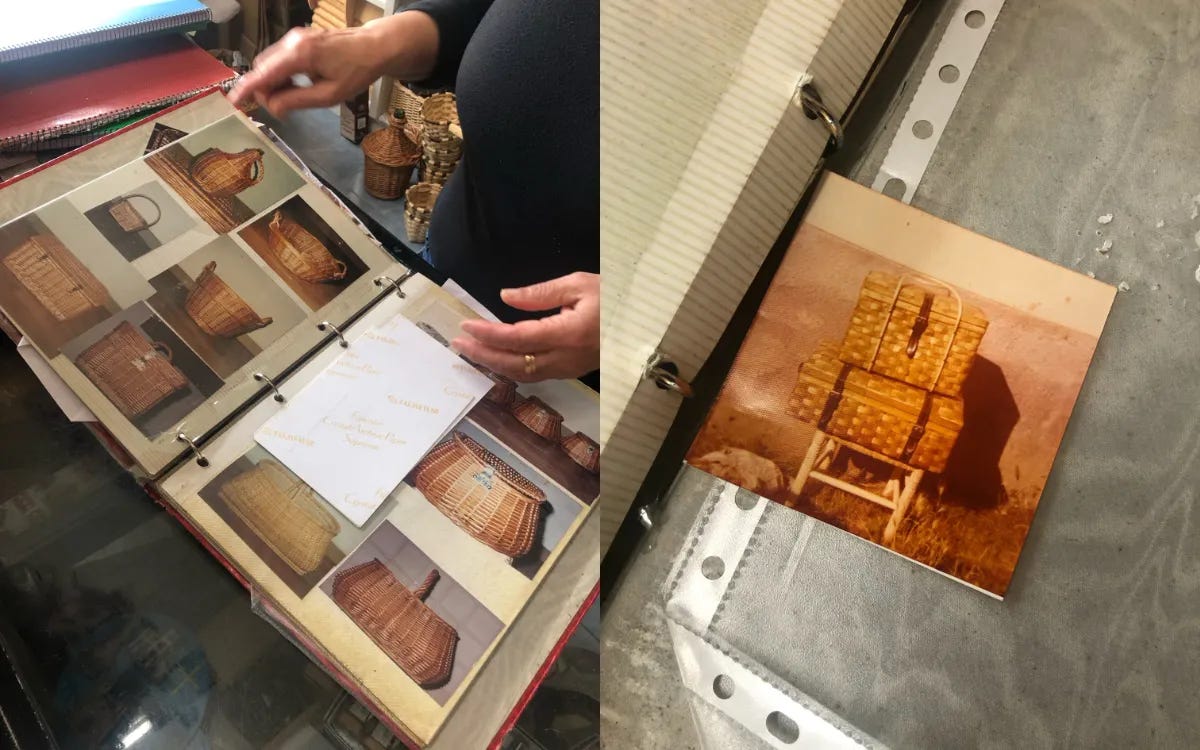
Sadly, like many other traditional craft practitioners around the world, the owners of Cestería Grao are ready to retire and there isn’t anyone interested in taking over the business. Flipping through the family album-style catalog of the many baskets and lamps and chests and creels they’ve woven over the years was an education in the shapes and forms willow can be bent into, and the innovation and practicality inherent in the craft. All of these uses, replaced by what? Plastic? Fabric lunch sacks are perhaps more convenient to carry to work than a big basket (I’m not sure I need quite that much lunch anyway, I’m no miner…), but it makes me wonder what else has replaced baskets in my everyday life.
On that note, my friend Johnny Suderman is teaching a bassinet weaving class this October in Ontario, inspired by a forthcoming member of our weaving circle. If making a basket for babies is something that interests you, leave him a comment here and he’ll follow up with more information.
If you are in or near Oviedo, Spain, Grado/Grao is a twenty minute drive away at plaza de las dos vias 19., 33820 and I strongly encourage you to visit; because the González siblings are retiring sometime in the next year, double check they’re still there before you go. You can see the Cestería Grao Facebook page is here, and there are many more images on their Instagram too. I loved seeing this beautiful old catalogue from the 1960s, all beautiful typography and black and white photographs tipped in. If you go, get me a maleta de ferroviario, will you?
Thank you to I and K for your translation help and bringing us to Grao!
We also visited another, very different style, of basket maker, but I’ll save them for a future newsletter.
Amanda