

September 2025
Adventures in Denmark, Part 1

This (and the remaining newsletters for 2025) will deviate from my usual format to share in-depth essays on my trip to Denmark this summer and the many wonderful textile encounters I had while there. I hope you enjoy this interlude from regular programming! It’s a lot of writing and photographs, so this newsletter will be clipped in your inbox — I encourage you to click on the title (September 2025) to visit this post in your browser so you don’t miss anything.
I’ve also included upcoming workshops at the very end, in case that interests you. Thanks!
Det Vilde Spinderi - An Artist Residency in Denmark
This summer I went to Denmark to attend an artist residency at Det Vilde Spinderi. I packed so much into the five and a half weeks I was there that it’s going to take more than one newsletter to share all the things, people, and art I encountered!
A residency is an opportunity for artists to take time away from routine and daily life to research and develop new creative work. It’s also a way to access new or unusual equipment, make connections, meet other artists, and learn about new cultures and contexts all while embedded within a place for several weeks or months.
Det Vilde Spinderi is a textile-based artist residency in the small town of Nykøbing Sj, Denmark, about 1.5 hours from Copenhagen by train. While there are other textile residencies (like the Ós Textile Residency at Textilmiðstöð Íslands/Icelandic Textile Center, which I attended in 2015), DVS is unique in that it’s not just dedicated to supporting artists and creative production — it’s a working yarn mill as well.


I applied to visit Det Vilde Spinderi (DVS) to spend some time using their knitting machines; I decided last year that I wanted to learn something new and, like looms, there aren’t many residencies that have knitting machines! I’ll speak more to what I made while I was there in a later newsletter, but the wide range of tools I had access to at DVS meant I tried more than just the knitting machine — I experimented with the FeltCrafts needle felting machine and the computerized Toika loom, too.
The first thing you’ll see after opening the front door at DVS is distinctive blue mini-mill equipment from Belfast Mini Mills in PEI, Canada. The scale of this equipment is much smaller than that of a traditional mill, offering an opportunity to have your sheep fleece spun into yarn locally, instead of having to send it away. Mini mill equipment is also really cool because it allows farmers to have individual fleeces or small flocks processed, which is often difficult with larger equipment that needs more raw material to work. Because of globalization, many of the local yarn mills that would have filled this role are closed, and the result is that local wool can’t be processed or effectively used. This is not a problem unique to Denmark — it’s much the same in Ontario where I am.
DVS’s aim is to spin wool from Odsherred (the area surrounding Nykøbing) that would otherwise be considered “waste.” Wool is a wonderful material — it can have many different qualities, textures, and softnesses, which means there’s something the wool of every breed of sheep can contribute. Having it processed locally and in small batches is, of course, better for the environment, but also preserves these unique qualities. One type of wool I saw at DVS was Spælsau, which has a two-layered coat and comes in several beautiful natural shades.


There are a range of things that DVS produces, which you can see in the small shop they have next to the mill. There’s yarn, obviously, and the things made from yarn: sweaters, bags, rugs, and other knit, crocheted, and woven items. They can also wash and card fleeces, to speed up the prep for hand spinning, or use the needle felting machine to turn it into felted sheets.
Up the spiral staircase from the mill is DVS’s gallery and the residency work space. In the gallery, you can see a permanent exhibition of woollen works from the mill: a wonderful children’s hut, felted sheepskins, and these cool sound-absorbent panels made from felted pockets. On the other side, you’ll find the residency workspace with sewing, knitting, and embroidery machines, cutting and making tables, looms, and more.
We’ll come back here in a future newsletter!


More Wool, Colour, and Art in Copenhagen
Before I even made it to DVS, however, I spent several days in Copenhagen (and beyond), acclimatizing (read: eating buns) and absorbing art and culture. I want to share some of that first — since I encountered several wonderful exhibitions and creatives that I think you’ll find interesting too.
While in Copenhagen I stayed in Nørrebro, a neighbourhood north-west of the city centre. One of the first things Gertrud, my host, pointed me towards was Hedestrik, a project that was literally around the corner from her flat. Hedestrik’s mission is to knit with unspun wool and is the project of four friends, Maya Høy, Liva Steuk Hansen, Asta Marie Budde Magaard and Anna Sejerø Svensson. It began in 2022 when two of the friends worked at a farm called Lystbækgaard as shepherds in training and learned you could knit with raw wool.
Like DVS, the first thing you notice when you enter the shop at Lundtoftegade 105 is the smell of raw wool; for Hedestrik, the practice of “dogmestrik” (which translates as “dogme,” dogma + “strik,”) is all about communicating with wool in its most pure and unprocessed form.
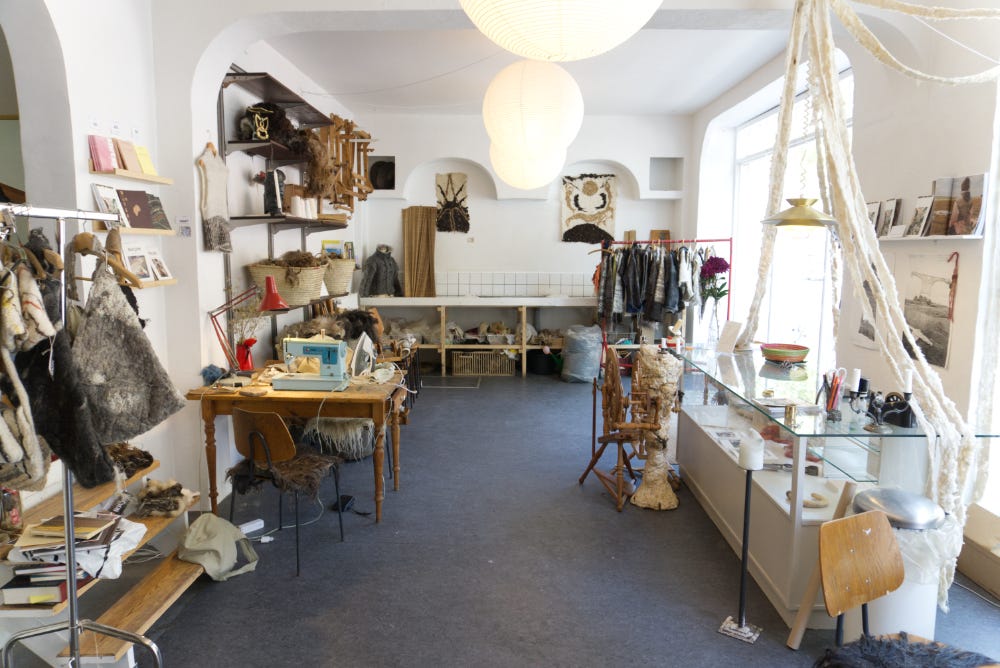
To knit a garment at Hedestrik you pull locks from clean, raw fleece, one at a time, spinning them into yarn using the heat and motion of your hands, before knitting them into equally as raw, unique garments. The finished pieces resemble an ancient garment pulled from a bog or something a sheep might make themself.
Working with raw wool means that you can really maximize the unique qualities of a fleece through felting, weaving, knitting, or crochet. The studio was full of baskets of fleece and hangers with garments and fabric. When I visited, I spoke to two interns who showed me their projects; one piece was a felted pullover with an integrated neck wrap/scarf — you can see it on Marain, the maker, on Hedestrik’s IG.
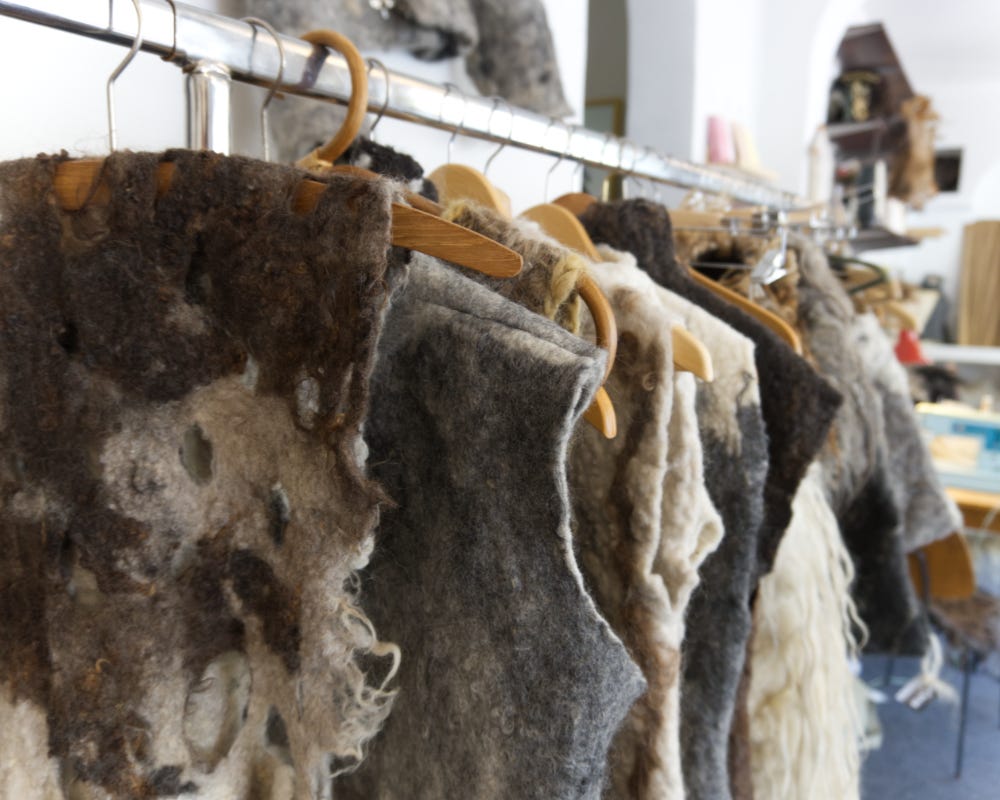
Hedestrik has an Instagram account and (Danish) website, as well as the physical shop, which was a delight to visit! You can learn more about Hedestrik in the latest issue of Copenhagen-based bookazine HÅNDVÆRK1, which came out this September. The Wool issue is the perfect place to spotlight the Hedestrik team, and learn about their process and practice.
I’ve wanted a copy of HÅNDVÆRK, which “portrays the living, changing practice of design and craft through in-depth interviews and portraits painted in both words and images,” for many years, so I was thrilled to pick one up while I was in Copenhagen. Each issue, which is entirely written, designed, and photographed by Rigetta Klint, takes an in-depth look at a single topic, like wood, decoration, or fashion. As a paper-media/analog sort of person, I feel like I’m always on the hunt for the perfect magazine, and HÅNDVÆRK comes pretty darn close!!

The interviews in the issue I picked up (issue 12, colour), range from recipes for Swedish rödfarg paint, handmade pastels from Chalk Copenhagen, klinker bricks in Landskrona, Sweden, and conversations with creatives like Astrid Skibsted (weaver), Margarethe Odgaard (textile and colour designer), and Anne Sofie Slot Thybo of Thybo Hand Dyed.
Design Museum Denmark & The Power of Print
I found a copy of HÅNDVÆRK at the Design Museum Denmark. Everyone recommended I go there while in Copenhagen, and I was lucky enough to visit while one of their special exhibitions was all about textiles!
The Power of Print (May 22, 2025 to January 4, 2026) showcases “textiles from the greatest Danish fabric printers throughout history, and [displays] new textiles from a select group of the most skilled textile printers of our time. The exhibition tells the story of an overlooked area in Danish craftsmanship and design, and for the first time, the lavish collection of Danish printed textiles … is presented on such a large scale”
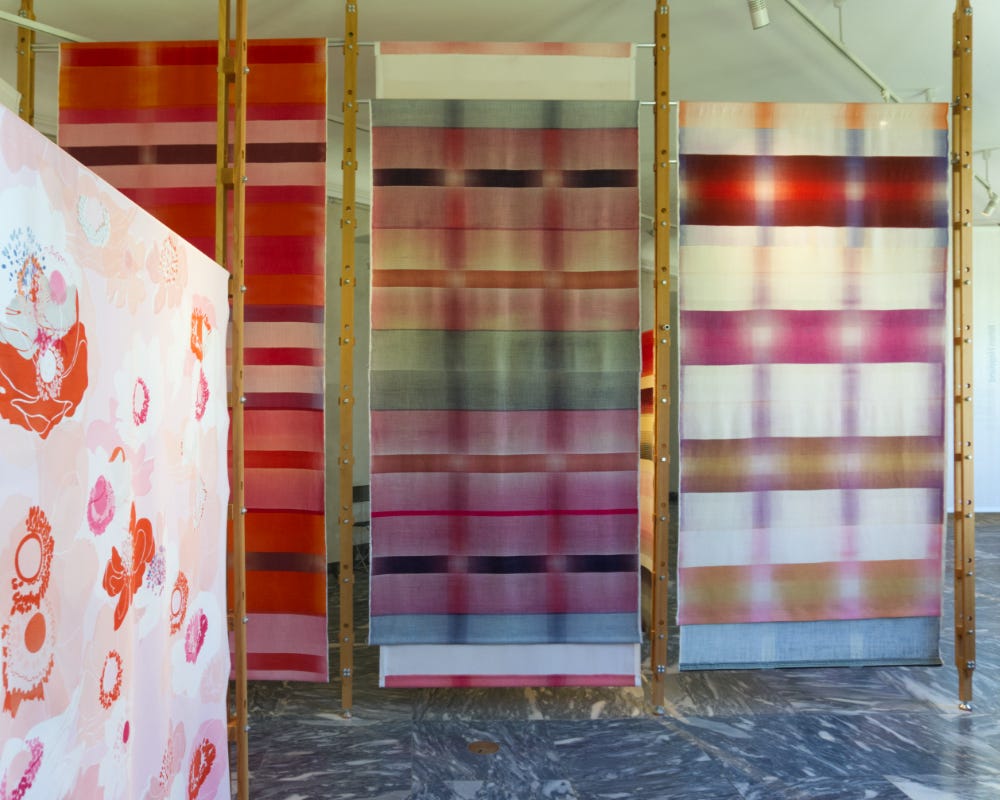
Prints, drawings, sketches, and lengths of printed cottons and linens from the early part of the 20th century onwards show how the development of the golden age of Danish design happened in tandem with the textile design innovations of several influential women designers.
Interestingly, while the prints feel familiar and recognizable today, the exhibition explains that until the middle of the 20th century, Denmark didn’t have a tradition of print design. It was the tenacity and vision of two artists, Marie Gudme Leth, and Gudrun Stig Aagaard, that elevated textile printing in the mid 1930s.


It began after Leth visited a screen-printing factory in Germany; seeing the potential for a domestic industry, she set up a workshop when she returned to Denmark and was, a year later, introducing her own textile prints for interior design and fashion.
These early prints were very simple: each motif in a design stood separate from the other, and and colour was applied very intensely. After the “grey glumness” (Zahle 17) of the post-war years, Danish screen-printers had developed a powerful visual language with bold, simple geometric patterns, and by the late 1950s, there was a flourishing market for mass-produced textiles produced by and in Denmark.


One of the major players in this industry was a company called Cotil, founded by the company C. Olesen in Copenhagen in 1957. Cotil’s philosophy was simple: artists and designers could anonymously submit proposals to an impartial jury, which would select the prints (and woven fabrics) for production2.
This anonymity meant that selections were based on artistic quality rather than name recognition or previous market success, and allowed for unexpected voices to emerge. Cotil’s prints and woven textiles were an enormous success, attracting designers that are now well recognized domestically and internationally, like Arne Jacobsen, Børge Mogensen, and Vibeke Klint (more on her shortly!).
It was hard to choose favourites from among these “historical” works from the Design Museum’s collection. So many of them felt as fresh and modern as they must have in the 60s or 70s. This through-line to contemporary practice was underscored by a newly commissioned exhibition displaying the work of eight prominent contemporary female textile designers who use hand printing techniques to focus on creative artistic expression.


There were several pieces from this exhibition that were very inspiring. Lisbet Friis’ energetic and vibrating “Magic Checks - Blurred Vision” fabrics looked woven, but are actually created using screen printing, reactive dyes, and etching (you can see more images on her Instagram). I also loved work by Else Borup Kallesøe and the jiggling stripes of Bitten Hegelund.
This exhibition was fascinating and engrossing; I spent 3 hours at the museum, and I was so overstimulated I had to sit in the courtyard and have my lunch halfway through. In one room there were several wooden cases with small drawers; each drawer was filled with different textile samples or fragments, sketches and production notes — opening each drawer (which I did!) felt like getting to continually unwrap a gift. There’s a publication that accompanies the exhibition that looks wonderful, too: Danish Textile Prints - 100 Years of Craft and Design by Kirsten Toftegaard.


The Power of Print and an exhibition of designer Anders Hermansens’s fascinating metal “sketches” were half the museum; the other half was the permanent collection, which was just as good as the special exhibitions! Of particular interest for me were the rugs and textile pieces of Vibeke Klint, presented alongside and underneath the famous pieces of midcentury modern furniture and design that Denmark is known for.
Vibeke Klint
Vibeke Klint (1927-2019) was a Danish designer and weaver who practiced during the golden age of Danish design. From a young age Vibeke decided she would be an artist, partly because she wanted to avoid staying at home, the primary occupation for Danish women in her day. Vibeke said that her discovery of weaving was a “coincidence. One day I had the opportunity to see how the work at a weaving workshop took place. I thought it looked like fun and exciting — and so I got started. Now I am happy in the job. It’s a lot more fun than dishwashing and dusting.” (Knudsen 51)
Vibeke attended what’s now known as the Royal Danish Academy/Det Kongelige Akademi, beginning the weaving course in 1946 with the mentorship and guidance of instructor Gerda Henning. When Gerda unexpectedly died in 1951, the opportunity to take over her weaving studio fell into Vibeke’s lap. It was unusual for 24 year old recent graduate to be running her own workshop in the early 50s, but Gerda’s well equipped studio, experienced weavers, and, importantly, clients, gave Vibeke a running start at what would become a long and successful career.
The studio produced a range of textiles for interiors and fashion; designers like Finn Juhl, Børge Mogensen, Hans J. Wegner and Poul Kjaerholm all commissioned work to go with their furniture and architectural projects, praising Vibeke’s modern, simple, and functional style. The clean lines, natural materials and simple colour palettes complimented their work and vision much more than the Oriental rugs3 that had dominated interior fashion in the previous decades.


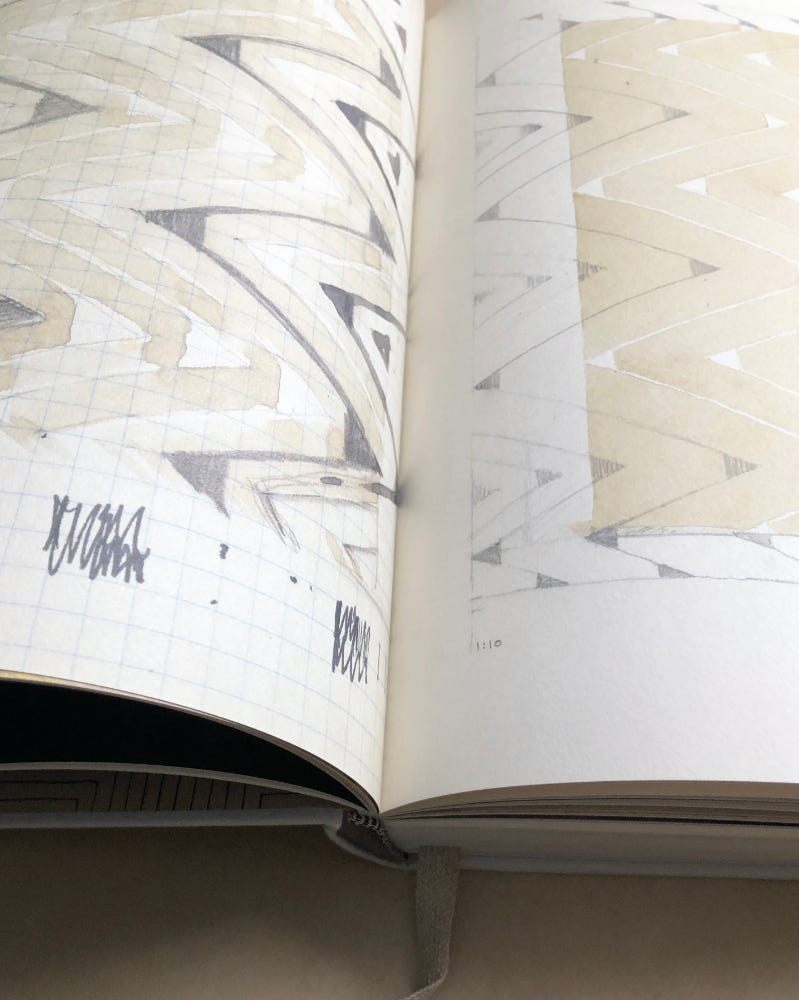
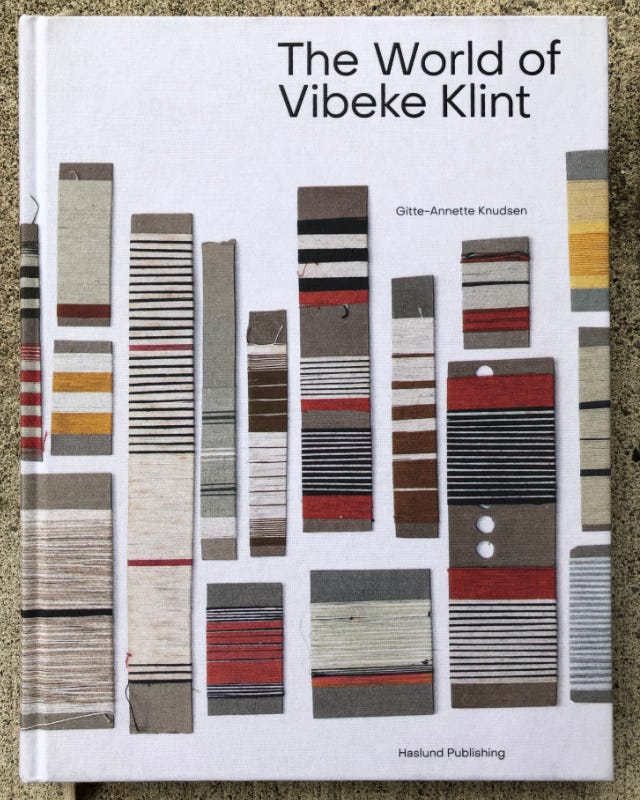
In 2021, a retrospective book of Vibeke’s preparatory sketches and woven work was published (in English and Danish editions), and is where most of my research for this story came from. Gitte-Annette Knudsen wrote the introduction to The World of Vibeke Klint; she wove several of Vibeke’s designs under her direction and, with Vibeke’s family, selected many of the drawings and sketches from her archive. I love some of the no-nonsense quotes Knudsen includes, like “My rugs are primarily for walking on… I’m not trying to get some artistic message through with my rugs. It is their decorative effect that matters. I do not feel “stepped on” because you walk on the rug. That is what they are meant for.” (Knudsen 57)
She also paints a wonderful picture of a person she knew and worked alongside for many years, and the warm and friendly environment Vibeke created at her home studio; pots and pots of black tea, fresh cake after a successful beaming, babies napping in the garden, and a morning bathe in the sea.
I am always fascinated to peek behind the magician’s curtain of artistic process, so the many drawings, sketches, photographs, and scribbled notes in this publication make it deeply pleasing. For example; several times I noticed an architectural detail on some train stations (alas, I didn’t get a photograph!), only to later see this distinctive pattern echoed and reflected in Vibeke’s drawings and rugs.
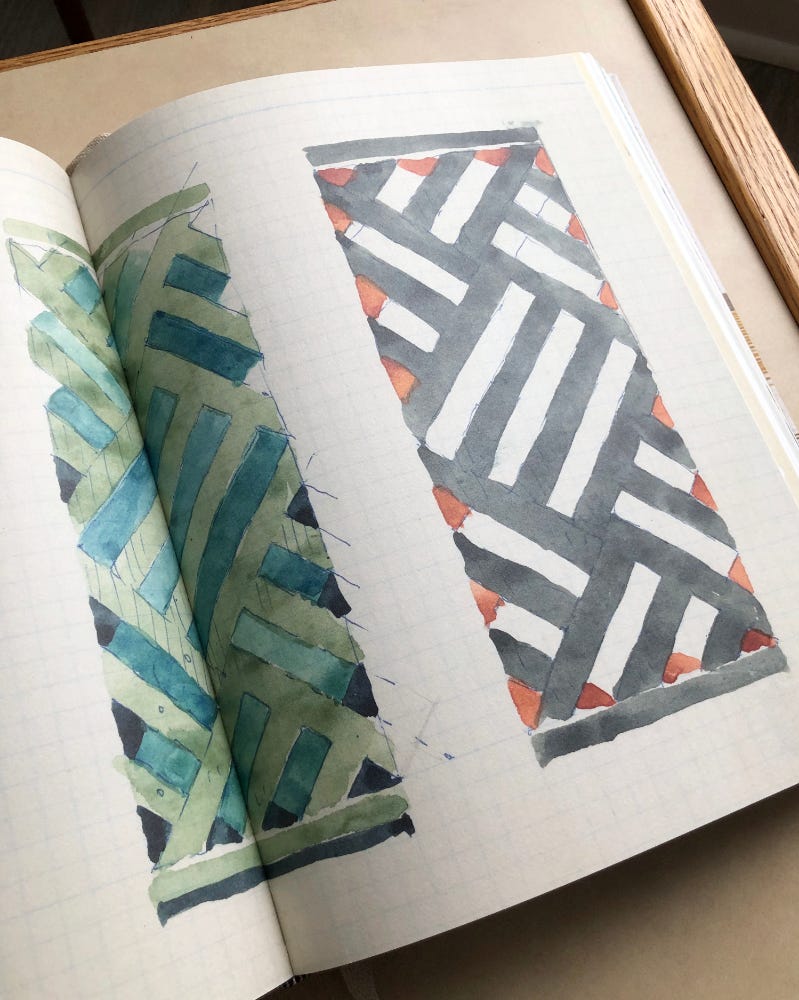
Vibeke, although having proficiency and training in weaving, preferred to stay in the background, drawing rugs, running the studio, and directing the weavers and 50 or so apprentices who trained at her home studio over the years.
The legacy of Vibeke Klint’s work and studio is closely intertwined with that of other famous 20th century Danish designers. She, like many of her contemporaries, often worked with and for Cotil, producing consumer curtains, tablecloths, and upholstery fabrics. Drawing on her strong sense of materiality and colour, Vibeke had established herself as a leading designer by the 1960s, creating “whole, quiet surfaces” (Knudsen 72) that underlined the “consistency between quality, simple patterns, and colours.” (Knudsen 73)
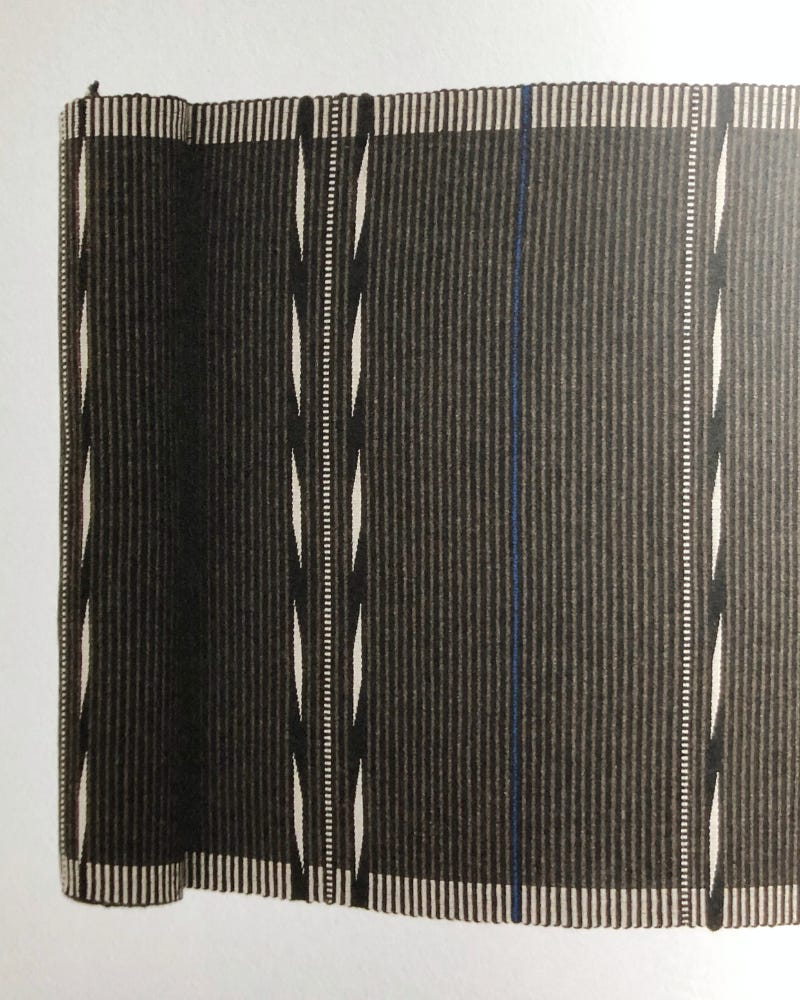
In the glut of things to look at when visiting the Design Museum, you might almost miss her rugs, sitting underneath furniture and on the wall — I feel like we have been habituated to ignoring textiles in our interiors, but these pieces reward close looking. As one of the special voices in the golden age of Danish design, Vibeke’s rugs stand out as an exceptional example of the mid-century urge to erase the distinction between art and function.
After her retirement, the studio closed down; Nordic Modern produces several select designs today, while other pieces live in the offices and residences they were made for, and, I hope, a few other museum collections too! The World of Vibeke Klint is well worth finding (and carrying all over Denmark) if you are interested in learning more about her and her practice.
More to come in October’s newsletter! A special thank you to my friend Clementine who read over this abnormal amount of writing for me. ♡
I would like gratefully acknowledge the support of the Canada Council for the Arts for my residency at Det Vilde Spinderi.

Upcoming Workshops
Weave a Scarf at the Art Gallery of Burlington:
Session 1 starting October 18th.Session 2 starting November 5th.
Colour for Knitters on Saturday November 8 from 12-4pm, at Unwind Yarn House in Newmarket, Ontario. This is a new workshop that’s about creative process and gaining colour confidence and is especially for knitters.
References
Cotil. www.cotil.dk. September 16, 2025.
Knudsen, Gitte-Annette. The World of Vibeke Klint. Haslund Publishing, 2021.
“Vibeke Klint.” Nordic Modern. www.nordicmodern.com/en/pages/vibeke-klint. September 17, 2025.
Zahle Erik, editor. Scandinavian Domestic Design. Methuen & Co Ltd, 1963.
Some of the information I used for this essay came from the interview with Hedestrik in HÅNDVÆRK.
The essay by Gitte-Annette Knudsen in The World of Vibeke Klint uses this term, which refers to a specific and recognizable style of short pile rug making that originated across many east and west Asian countries. I did look to see if there was a modern term that could still convey what this outdated word does, but I couldn’t find one. If you know, please let me know!
I saw the Museum of Design exhibits last week. You did a great job of describing the history of Denmark’s fabric design. I also went to the Denmark National Museum and saw spinning and weaving materials there … including a large carved rigid heddle. I purchased hand dyed yarn at the National Museum!
I also visited several lovely yarn stores in Copenhagen.
I’m in Norway now … Flåm, Oslo, & Bergen. Norwegian textiles and fiber arts seem to be knitting & halving oriented here. I get it … the weather is cold and rainy. Oslo & Bergen have lovely yarn stores too.